
Magnite Targets CTV, SMBs And Google's SSP Market Share
The SSP is betting on the DOJ’s antitrust remedies, plus closer relationships with agencies, DSPs and mid-sized advertisers, to help it eat some of Google’s lunch.
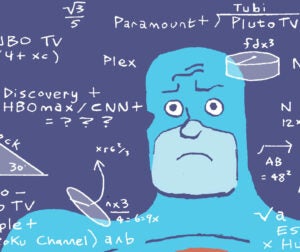
The SSP is betting on the DOJ’s antitrust remedies, plus closer relationships with agencies, DSPs and mid-sized advertisers, to help it eat some of Google’s lunch.
Change can be bumpy. From The Trade Desk’s Solimar-to-Kokai transition to Nielsen’s transition to its Big Data + Panel offering, we go inside customers’ challenges with these two transforming platforms.

The Trade Desk currently has no concrete plans to deprecate its legacy Solimar user interface in order to push adoption of its new UI, Kokai.
Ad agency hold cos have broadcasted their earnings. As AI and acquisitions transform their businesses, there are clear winners and losers. With media as a strong spot, we discuss the paradox of “transparent nontransparency.”

Carat is using “people-powered” AI to build agents that understand how to best reach specific audience personas.
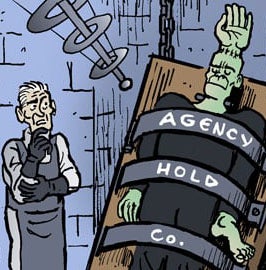
During what was supposed to be a quarter marked by financial uncertainty, IPG did slightly better than expected.
For advertisers, the holiday season poses an optimal opportunity to reach a new and broader audience, boost sales and foster brand loyalty with customers. And this season, CTV should be a core area of focus.

Sing along, now: “Everything is an ad network!” Plus, Publicis is doing A-OK and Substack is changing its tune on advertising.
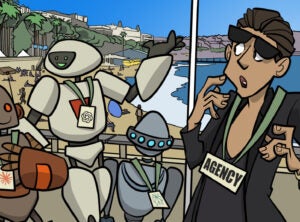
The rapid evolution of generative AI technology has created uncertainty between brands and their agencies. But finding answers can be difficult when advertisers often don’t even know what questions to ask.
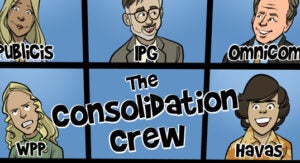
Water is wet, the sun sets in the west and Omnicom still says it expects to close its merger with IPG in the second half of this year.
Curated deals were once seen as a smart way to bring structure to programmatic chaos. Today, they’ve become table stakes.
YouTube accounts are uploading recent Hollywood movies, racking up views while advertisers (and sometimes creators) remain in the dark. Plus: Could Cloudflare’s AI bot blockers provide a salve for digital media’s traffic declines?
AI Overviews are even dinging Google Search ads’ traffic; WPP downgrades its earnings forecast; and Google’s AI competitors launch their own web browsers.
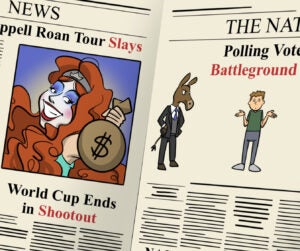
Critics say the FTC’s deal with OMG/IPG prohibits agency practices that don’t exist. And it distracts from legitimate concerns about brand safety news blocking and principal media.
Have agency holdcos put too many eggs in the AI basket?; Temu has come back to us now at the turn of the tariff tide; and Cloudflare wants to help sites from getting scraped.
Where would the New York Times be without its recipes?; Cannes Lions deals with controversy; and Netflix wants to get ultra-personal with its ads.
The FTC approved the Omnicom-IPG merger, but with a brand-safety caveat: The agencies cannot create agency-level blocklists of any media that’s political or ideological. With Ad Fontes CEO Vanessa Otero, we unpack the consent order’s ramifications.
The FTC puts some odd stipulations on Omnicom-IPG; influencer marketing is the new normal; Google is cutting its smart TV group.
From Cannes Lions, our editorial team discusses the mix of perspectives on the ad industry’s application of AI: the opportunity, the hesitation and the predictions of how it will disrupt marketing.
Expect more ad agency holdco consolidation in the next year; people are starting to talk like ChatGPT; inside the weirdness of matching political funds.
As premium game prices skyrocket and paid subscriptions and cloud-based gaming services take off, marketers sense a chance to defray rising costs with ad revenue – perhaps dispelling some doubts about the value of more ads in games.
In the latest sign of massive change among ad agency hold cos, Mark Read is stepping down as leader of WPP. We unpack the impact of AI on agency hold cos and media, including WPP Media’s prediction that 2025 will be the first year in which the majority of ad spend flows through user-generated content.
Dentsu and Criteo announced a strategic partnership to consolidate their respective retail audience data within Dentsu Connect, the agency holding company’s data and identity product.

Open Intelligence is WPP’s Media’s new solution to help advertisers make sense of their data and use it in more ways, with a longer-term goal of decentralizing data.
For proof of the uncertainty facing marketers in 2025, look no further than the industry’s ping-ponging projections for ad spending. WPP Media’s revised forecast is just the most recent example.
Mark Read is exiting WPP at the end of the year; the CEO of DeepMind is important, we swear; Google’s major SEO swings have changed the game.

Sigma, MiQ’s new AI-powered ad platform, gives advertisers better analytics and attempts to unify the fragmented data landscape.

Michael Komasinski, Criteo’s newly-minted CEO, shares his vision for the company – and swears that Criteo doesn’t regret its huge investment in testing the Chrome Privacy Sandbox.
Sports sponsorships can play well for small brands; Perplexity was first to AI search ads, but advertisers waited for Google; and GroupM officially rebrands to WPP Media.

Former Goodway Group CEO Jay Friedman shares hot takes on everything from curation (“absurd”) to brand safety (“botched”).

To those who knew him, John “JG” Gentry wasn’t just a CEO. He was a colleague who showed up with genuine care and curiosity.

The group that turned header bidding software into an open standard is bringing the same approach to publisher-side AI agents.
Meta is channeling its booming ad revenue into a $135 billion AI drive to power its “personal superintelligence” future.

Most publishers have no idea that a major part of their video ad delivery will stop working on April 30, shortly after Microsoft shuts down the Xandr DSP.
Ads were going to be a “last resort” for ChatGPT, OpenAI CEO Sam Altman promised two years ago. Now, they’re finally here. Omnicom Digital CEO Jonathan Nelson joins the AdExchanger editorial team to talk through what comes next.
This Wednesday marks the beginning of Hershey’s first major brand marketing campaign since 2018