
AI Can Do Your Job Better Than You Can (Well, Actually, It Depends)
When used strategically, AI can produce content on par with the quality of marketers’ work. What does that mean for the job market?

When used strategically, AI can produce content on par with the quality of marketers’ work. What does that mean for the job market?

Brands spend millions activating around Coachella. Then they spend the next three months trying to figure out if any of it actually worked. It’s a reflection of our industry’s broken approach to measuring media effectiveness.
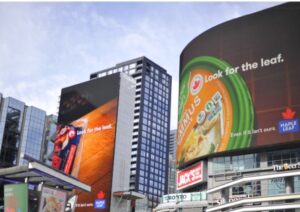
Amidst post-tariff tumult, this campaign encouraged grocery shoppers across Canada to buy products featuring the maple leaf icon that designates Canadian brands.
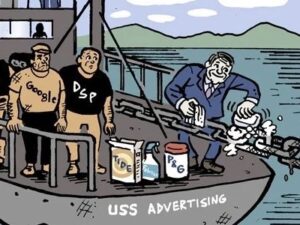
Marketing zippers is harder than you think; What should the new SEO be called? And TV-era consumer brands are all-in on influencers.
Pixels attached to articles explaining a recent health diagnosis – without consent – led Healthline to a record $1.55 million fine for violating CCPA. Plus: the new AI contract.

The rapid evolution of generative AI technology has created uncertainty between brands and their agencies. But finding answers can be difficult when advertisers often don’t even know what questions to ask.

Overreliance on performance channels in pursuit of short-term gains creates fragility in the growth model, especially when brand equity is underfunded and unable to drive demand.
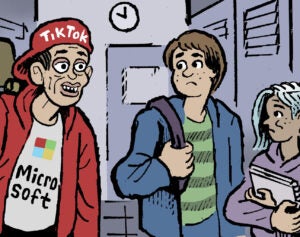
The Trade Desk makes the S&P 500, triggering a stock price rebound; Estée Lauder is the latest big legacy brand to embrace influencers; and CMOs are trying to measure their return on AI, but it’s tricky.

Over the past few years, sell-side curation has gained popularity as a way for advertisers to target high-quality publishers. Companies like OpenX are expanding their toolkits to support advertisers as well as publishers.

TV audiences are rallying around CTV, and advertisers are following suit . But with this shift comes a persistent challenge: How can advertisers ensure brand safety, campaign efficiency and audience relevance in a fragmented, opaque streaming ecosystem?

Linkby, which connects brands with publisher content that advertisers pay for based on reader engagement, announced its $15 million Series B on Tuesday.

Marketers today are operating in an outcome-obsessed world. For mobile app marketers, especially, the smallest screen in the home – the mobile phone – has become the default choice for driving lower-funnel outcomes.

Curated deals were once seen as a smart way to bring structure to programmatic chaos. Today, they’ve become table stakes.
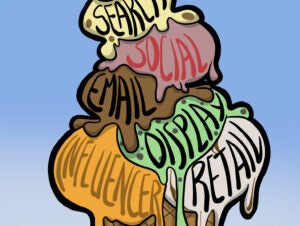
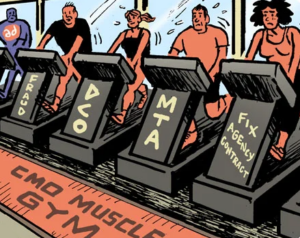
Enjoy this weekly comic from AdExchanger.com that highlights the digital advertising ecosystem …
YouTube accounts are uploading recent Hollywood movies, racking up views while advertisers (and sometimes creators) remain in the dark. Plus: Could Cloudflare’s AI bot blockers provide a salve for digital media’s traffic declines?

Data and tech company Fyllo announced its relaunch as an advertising partner for regulated industries, helping brands adhere to stringent state laws and publisher policies.

Advertising restrictions on social platforms often flag keywords and images used in women’s health care ads, preventing those ads from reaching their target audience. There is a “gag order around women’s health care,” Caruso said.

Making Science recently launched an AI tool that helps advertisers optimize their marketing campaigns while maintaining creative control.
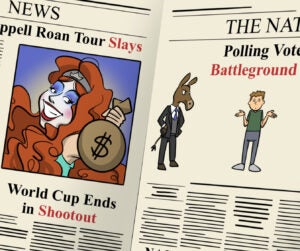
Critics say the FTC’s deal with OMG/IPG prohibits agency practices that don’t exist. And it distracts from legitimate concerns about brand safety news blocking and principal media.

Häagen-Dazs launched its new “Slow” campaign earlier this year, hoping to strike a chord with a diverse array of consumers across platforms.

On Wednesday, AI-powered audio intelligence platform Sounder launched a new version of its brand suitability and contextual targeting tool for podcasts that can understand the nuances of Spanish-language audio content.
The FTC approved the Omnicom-IPG merger, but with a brand-safety caveat: The agencies cannot create agency-level blocklists of any media that’s political or ideological. With Ad Fontes CEO Vanessa Otero, we unpack the consent order’s ramifications.
Pub tech SaaS startup Swivel wants to make ad ops much less manual and time-consuming with an AI-driven yield optimization tool designed by people who used to build ad servers.

In a world where privacy regulations are tightening and third-party cookies are increasingly unreliable, first-party data has emerged as a cornerstone of modern marketing strategy.
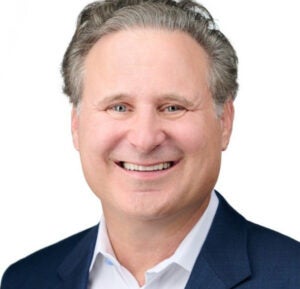
US Bank CMO Michael Lacorazza on the brand’s novel use of AI: Creating avatars of key target customers to capture insights and inform ad creative.

With a growing array of platforms and channels competing for consumer attention, advertisers have been increasingly looking for ways to understand which ads and placements drive engagement and sales – not just engagement and sales that would have happened anyway but true incrementality.

After a reenergizing week at the Cannes Lions festival, here are six observations on how our industry is changing to meet its new challenges.

Fragmentation was on the list of hot topics at Cannes 2025. Allison Schiff, Managing Editor of AdExchanger sat with MiQ’s Tom Richards to learn how MiQ is unifying the complex programmatic landscape for advertisers with MiQ Sigma, a conversational AI agent that transforms hours of manual work into moments of strategic insight. Discover how MiQ […]
From Cannes Lions, our editorial team discusses the mix of perspectives on the ad industry’s application of AI: the opportunity, the hesitation and the predictions of how it will disrupt marketing.

When it comes to the red-hot retail media sector, history doesn’t have to repeat itself. Here’s how to add accountability and transparency to a space where those attributes are sorely lacking.

To those who knew him, John “JG” Gentry wasn’t just a CEO. He was a colleague who showed up with genuine care and curiosity.

The group that turned header bidding software into an open standard is bringing the same approach to publisher-side AI agents.
Meta is channeling its booming ad revenue into a $135 billion AI drive to power its “personal superintelligence” future.


Most publishers have no idea that a major part of their video ad delivery will stop working on April 30, shortly after Microsoft shuts down the Xandr DSP.
Ads were going to be a “last resort” for ChatGPT, OpenAI CEO Sam Altman promised two years ago. Now, they’re finally here. Omnicom Digital CEO Jonathan Nelson joins the AdExchanger editorial team to talk through what comes next.
This Wednesday marks the beginning of Hershey’s first major brand marketing campaign since 2018