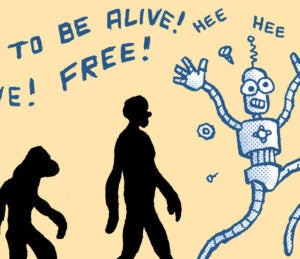
Just when we were starting to get comfortable talking to AI, a new bombshell entered the villa: ads in chatbots.
This much we know. What we don’t know is exactly how AI search platforms plan to serve these ads without disrupting the user experience. It’s also unclear how brands can remain authentic while experimenting with these new, largely untested ad formats.
After all, chatbots are still a new frontier.
Although it’s hard to recall the pre-chatbot world, ChatGPT and Perplexity only launched a little over three years ago, and Microsoft’s Copilot followed a year later. In that short time, AI and AI search have taken root, and ads were bound to follow.

The heat of the moment
Chatbots could unlock major opportunities for advertisers – specifically, the ability to reach consumers at the exact moment they’re ready to purchase something, with a highly specific understanding of what they’re looking for.
Because users prompt chatbots with very specific queries – often including details like desired price range and even their preferred brand – advertisers get an “unheard of” level of contextual understanding, said Nishant Khatri, PubMatic’s EVP of product management.
Which leads to the question traditional publishers don’t want to face: Where do they fit now that their biggest rivals are encroaching on one of the few advantages they had left?
As traffic continues to drop off as a result of AI search and Google’s AI Overviews, publishers are scrambling to stay relevant, with strategies ranging from AI-ifying their homepages (see USA Today and Newsweek) to striking deals with the devil Google itself.
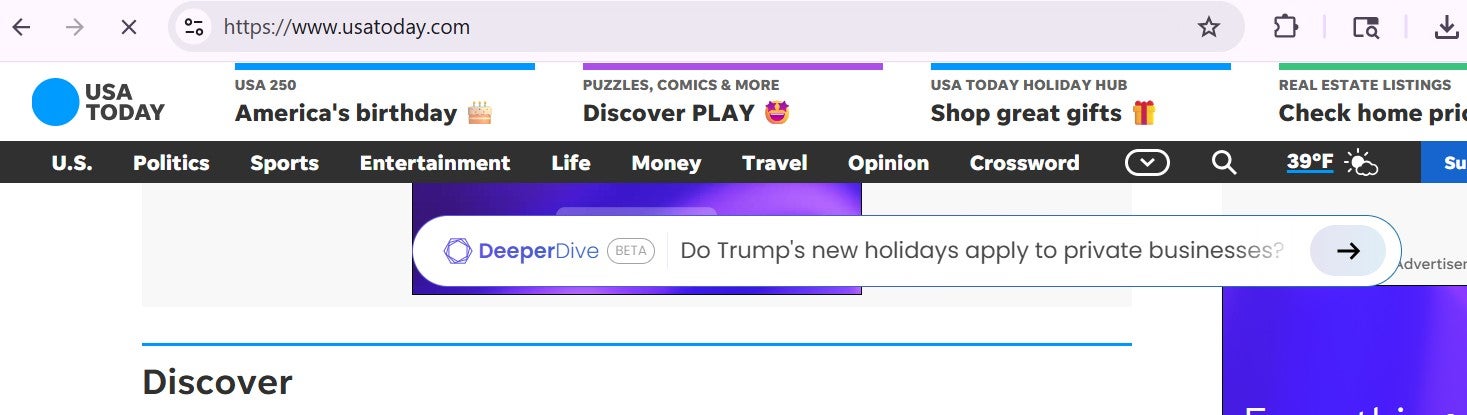
One of the best bets for publishers, said Al Kallel, CEO and founder of creative tech startup Nativeads.ai, is for them to develop their own chatbots so they can keep pace with new monetization trends and tap into new AI search budgets.
Why add an ad?

But blending ads into a conversational format comes with its own set of risks for advertisers.
By introducing “another voice in the room” (i.e., the chatbot), advertisers could end up with messaging that feels inconsistent or off-brand, said Christi Geary, GM of ad agency AMP. If brands aren’t careful, a small shift in voice can “dilute” what they’re trying to express, she said, eroding consumer trust – and, by extension, the credibility of the AI platforms delivering the ads.
Concerns about trust are among the reasons OpenAI CEO Sam Altman was slow to “come around to the idea of ads,” said Debra Williamson, chief analyst at Sonata Insights.
Altman’s stance on putting ads in ChatGPT has evolved from referring to it as a “last resort” to his being “not totally against it” to eventually acknowledging that ads are in the works, although not imminently.
His hesitation likely also stems from the fact that many consumers hate ads, especially in places they don’t expect them. Earlier this month, ChatGPT actually removed unpaid promotional content that resembled ads due to strong consumer backlash.
And it makes sense. Chat, more so than search, can feel like a “very personal” platform, since it’s a back-and-forth conversation, said Cristina Lawrence, chief social and innovation officer at Razorfish. Now that advertisers can “invade” those spaces with paid ads, she said, those ads better be “truly helpful” and targeted.
What people do love, however, are deals. As a consumer, Kallel says he’s open to advertising that adds value to a conversation, like a discount code or a special offer that isn’t included within organic results.
Deals can make ads feel less like lip service and more like, well, an actual service.
Discounts and free shipping aren’t the kinds of messages “that people would be unhappy about,” Williamson said. For instance, she recently used ChatGPT to find the best deal for a specific frying pan that was priced differently across retailers. In situations like that, Williamson said, users are primed for an offer since they’re already prepared to make the purchase. “I’d be like, yes, of course I want that,” she added.
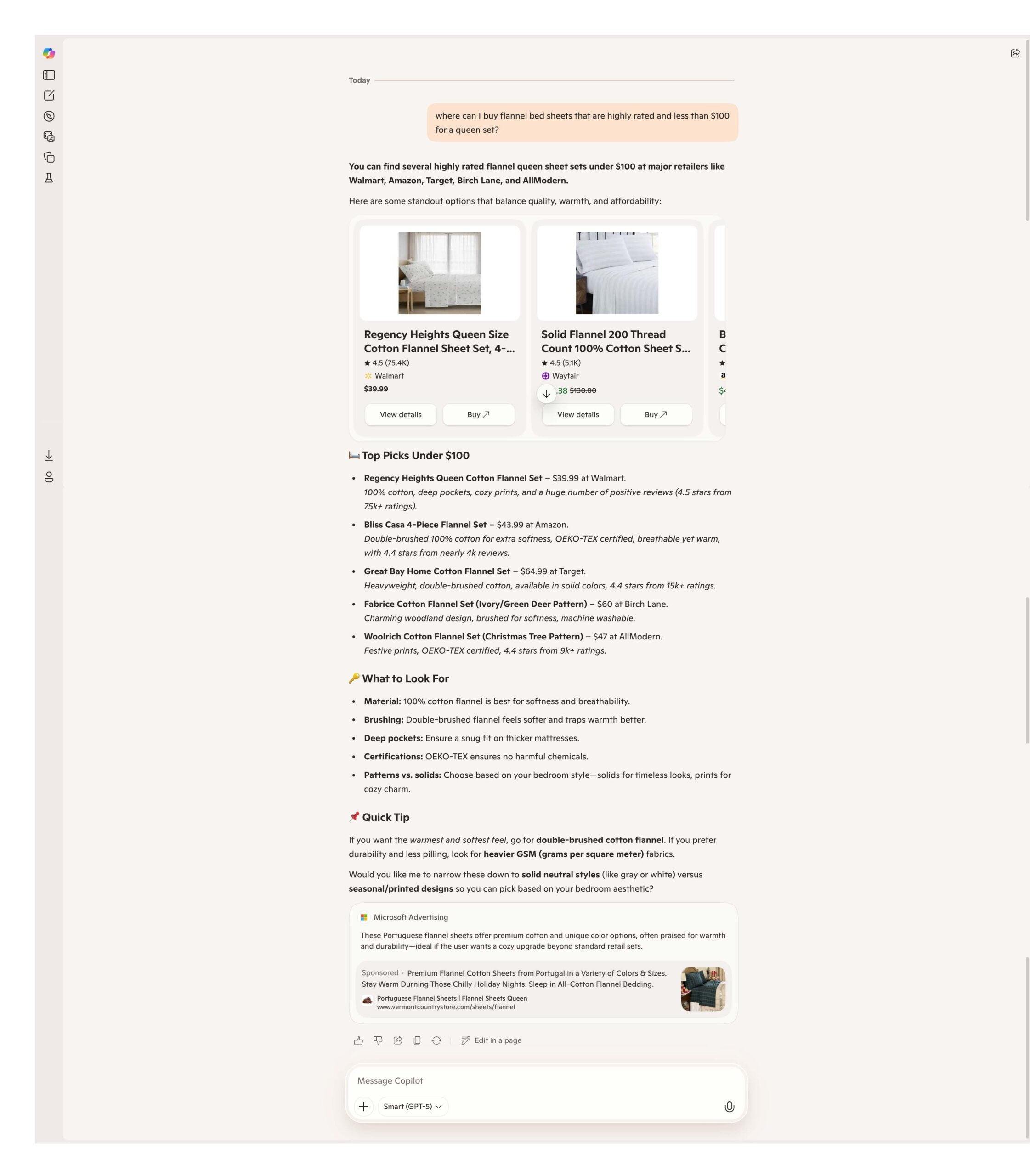
But Williamson isn’t convinced that AI companies will take the native advertising route.
In Microsoft Copilot, for instance, ads are “really boring” thus far, said Williamson, who recently came across an ad for bedding while asking the chatbot for bedsheet recommendations. The ad she was served was all the way at the bottom of the conversation – far below the organic recommendations – and looked like a standard text ad that “could have appeared anywhere,” she said.
(Don’t) trust the process
Still, dull ads are safer than ones that damage trust – and some experts worry that AI platforms will lose consumer trust by introducing ads at all.
Of course, the risk hasn’t stopped marketers from trying to play up the way their brands appear in AI search results as a new type of search optimization begins to take shape.
If you’ve been living anywhere other than underneath a gigantic rock this year, you’ve probably heard the terms GEO (generative engine optimization) and/or AEO (answer engine optimization) being tossed around. GEO and AEO are essentially the new SEO strategies for AI chatbots, which brands are using to try and show up more frequently and favorably within AI-generated search results.
Best practices include making sure a brand appears on social platforms that chatbots scrape, like Reddit, and optimizing website copy to match the language used in common AI search queries.
But with ads, brands can buy their way in, which means AI platforms will have to be intentional about how paid messages appear in order to maintain credibility.
Yet it’s exciting to have “one more shoppable touch point,” AMP’s Geary said, and a new space to “connect the dots” and “drive creativity.” The marketer’s challenge, she said, is to cut through the noise, drive a true connection and “do it in a way that creates sustained relationships.”
Otherwise, Lawrence noted, “it’s going to feel like spam.”