
The POV On Data Privacy As The Clock Ticks Down To A Second Trump Presidency
Nikki Bhargava, a partner at law firm Reed Smith, spoke with AdExchanger about knowns – and unknowns – on the privacy as we gear up for the next four years.
Nikki Bhargava, a partner at law firm Reed Smith, spoke with AdExchanger about knowns – and unknowns – on the privacy as we gear up for the next four years.
Meta’s privacy policies are uniquely impenetrable. Plus, Google once thought Apple would likely expand its ad business to third-party apps.
While tech companies are jumping on the curation bandwagon, publishers are left to navigate a new normal in programmatic advertising, where they often don’t have a say.

The odds of RFK Jr. implementing a ban on TV drug ads are slim, says our guest this week, BranchLab’s Josh Walsh. Still, pharma advertisers could face other regulatory changes over the next four years. Plus: We break down Forrester’s picks for the top 10 SSPs.

The Justice Department will ask Judge Amit Mehta, who ruled in August that Google operates a search monopoly, to require Google to sell Chrome. Plus, the ad tech wants the IAB Tech Lab to roll out curation standards.
The Federal Trade Commission is warning companies that using a data clean room isn’t some kind of get-out-of-compliance-free card.

Why the agency pivot to alternative payment models is good for M&A; Zeta Global responds to a short-seller’s explosive claims; and X sees a mass exodus after the election.

As media consultancy Sequent Partners ceases operations, its leaders look back at how far the ad industry has come – and how far it still needs to go.

The deal is a “platform investment,” in which Inverness Graham sees Alliant as a foundation to build on, potentially through further acquisitions.

One key to successful advertising is showing ads to people at just the right moment. Advertisers understand the typical smartphone user moves seamlessly between apps and websites throughout the day, and this makes showing ads on both crucial to reaching their audience.

Even when third-party cookie deprecation was ostensibly still in the offing last year, there was only modest publisher adoption of the Protected Audiences and Topics APIs, according to data from Sincera.

Adelaide may become the first vendor to receive accreditation for an attention metric. Plus, the IAB is leading a lawsuit against the FTC.
A tool popular with law enforcement can track devices to sensitive locations. Plus, black boxes are getting a bit more transparent.

For Carat US Chief Investment Officer Carrie Drinkwater, data is essential to driving success – but it’s not the whole story.

A new nonprofit organization in the UK wants to develop the first regulator-approved privacy-compliance certification for ad tech – and it’s got the UK’s data protection authority on board.
Nobody likes social media bots… but what about users who act like bots? Plus, even telling someone to go vote might get your content flagged.

The catalyst for Google’s future success – regardless of any legal ruling – is its YouTube strategy. Opening YouTube’s ad inventory to outside demand will increase its value.
NCIS: Ad Tech takes off as Washington zeroes in on Adalytics reports; Kroger says attention has yet to prove correlation to performance; and inside California’s backroom deal with Google to fund journalism and AI.

In-game ad platform Frameplay joins with competitors to chase scale; top-level domains become a top-level concern; and could Google be forced to open its data warehouse?
It’s been more than two months since Google said it would forego third-party cookie deprecation in favor of a user choice mechanism. But it hasn’t shared any details yet.
It’s a wrap on the US v. Google antitrust case, at least for now. Then, behind the IP infringement claim on the OpenRTB spec that ruffled feathers at the IAB Tech Lab.

Google isn’t perfect. But it offers convenient, cost-effective advertising tools that millions of small businesses use to find customers, grow and succeed. If the DOJ breaks up the company, it will also break those tools.

A web crime ring that sold Facebook account service tickets collapses in dramatic fashion; how US antitrust precedent could inform the DOJ/Google ad tech trial; and more publishers turn to paywalls as the open web shuts its gates.

Competing agendas are limiting the tools publishers have at their disposal in ways that aren’t always primarily motivated by user privacy. Here are five things about privacy in digital media that should keep publishers up at night.
Hear what the ad tech industry is saying about Google’s antitrust trial. Then, a rundown on how the election is playing out for political advertisers and news publishers.
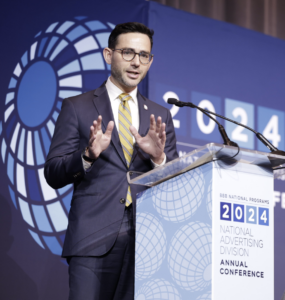
Let’s clear the air. The Federal Trade Commission does not hate advertising, says Samuel Levine, the agency’s consumer protection chief. But the FTC does have a few suggestions for the ad industry.

The FTC’s got a new report on the data collection practices of large social media and video platforms. Plus, Amazon has its own “Shark Tank.”

Has the Federal Trade Commission been overstepping its bounds? Yes, according to newly appointed Republican FTC Commissioner Melissa Holyoak.
The FTC’s latest staff report has strong message for social media and streaming video platforms: Stop engaging in the “vast surveillance” of consumers.
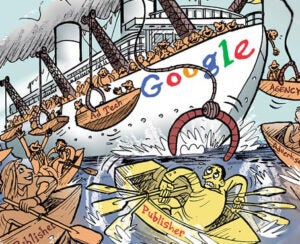
Publishers were encouraged to see the DOJ highlight Google’s stranglehold on the ad server market and its attempts to weaken header bidding.

To those who knew him, John “JG” Gentry wasn’t just a CEO. He was a colleague who showed up with genuine care and curiosity.

The group that turned header bidding software into an open standard is bringing the same approach to publisher-side AI agents.

Meta is channeling its booming ad revenue into a $135 billion AI drive to power its “personal superintelligence” future.


Most publishers have no idea that a major part of their video ad delivery will stop working on April 30, shortly after Microsoft shuts down the Xandr DSP.
Ads were going to be a “last resort” for ChatGPT, OpenAI CEO Sam Altman promised two years ago. Now, they’re finally here. Omnicom Digital CEO Jonathan Nelson joins the AdExchanger editorial team to talk through what comes next.

This Wednesday marks the beginning of Hershey’s first major brand marketing campaign since 2018