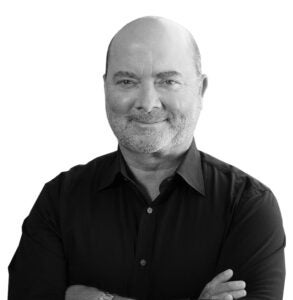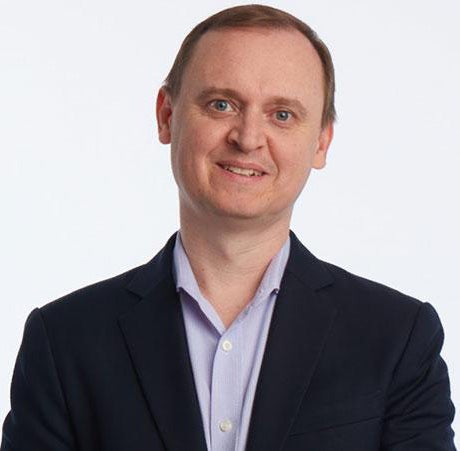
In a post on LinkedIn announcing his departure last week after eight years at IPG-owned UM Worldwide, Joshua Lowcock quoted lyrics by the singer Poppy from a song called “Bloodmoney” to help explain what motivated his decision to leave.
“What do you believe when everyone is watching? … When nobody’s watching, what do you believe?”
The answer to these questions can be surprisingly different. Or perhaps not all that surprisingly different to those who have spent a long time in the ad industry.
“It’s an open secret that the industry has challenges, and not just the challenges people talk about publicly, like cookie or device ID deprecation,” said Lowcock, who most recently served as UM’s global chief media officer.
Lowcock is now in the newly created president role at Quad Media, the media division within Wisconsin-based Quad, a family-helmed, now-public commercial printing company founded in the 1970s, which more recently evolved into a full-service marketing agency with ambitions of growing its first-party data business.

Speak up, speak out
It’s understandable why people typically keep their honest opinions to themselves – the ones that, if acted upon, could spark change in an industry that needs it. Inertia is a powerful force, and there is a strong incentive not to stand up for fear of being knocked down.
But mics – and pretenses – have dropped across the online advertising industry.
Just a few weeks ago, Arielle Garcia, who had reported to Lowcock, resigned as chief privacy and responsibility officer after a decade. She reached the conclusion that the large agency holding company model “is rife with competing interests and conflicting loyalties” and “shackled to the industry status quo.”
Which is perhaps why the time has come to make sticking with the status quo less comfortable by doing the difficult thing: Saying the quiet part out loud.
“The conversations you have in private, we need to start having those conversations in public,” Lowcock said. “That’s the way we’re going to drive change in the industry.”
Lowcock spoke with AdExchanger four days into his new job at Quad.
AdExchanger: I’ve heard many people, including yourself, say “the holding company model is broken.” Is it fixable?
JOSHUA LOWCOCK: Holding companies are structured in a way that makes it difficult for them to change. You have to unlock decades worth of systems, processes and behaviors. It’s not that it can’t be done; it’s just extremely difficult. The reason why I came here [to Quad] is to build the right solution from the get-go.
What makes a company like Quad different?
Last night, I was with the CEO of Quad [Joel Quadracci], and he opened his conversation with the team talking about how values, ethics and integrity are everything, and that every decision is based on those things. If we sacrifice that, it undermines our principles and how we should be servicing our clients. The company genuinely believes this, and that is the appeal.
How did a printing and graphics company become a provider of audience targeting and media solutions?
Data-driven marketing started with direct mail. It’s been an addressable media since the dawn of time. Quad moved with the times and embraced other methods to deliver addressable media.
What first-party data does Quad have?
Quad prints a significant chunk of the direct mail in the US. We know what people receive, which gives us insight into the profile and interests of every household based on the mail they get as a subscriber to various products and services. And it’s 100% deterministic.
What’s the vision for your job, and what will you build with that audience data?
We need to productize and commercialize it. There are ways we’re already integrating with clients on the digital side, but that can be accelerated and amplified.
I’ve spoken a lot about resilient data, and the home address is resilient. Mapping those insights to digital data and being able to deliver addressable media off the back of that will be significant.
Zooming out, we’re seeing high-profile executives like yourself leaving plum posts and a growing industrywide appetite for transparency into how ad tech works. Arete Research has coined a term for this category – forensic ad tech – which includes companies such as Adalytics, Sincera, Confiant and Zefr. Do you think these dynamics are finally pushing the ad industry to an inflection point?
That’s the million-dollar question. I think the industry is ready and wants to change, and “forensic ad tech” is a great way to describe it. It’s important and necessary, but it’s a symptom of a problem, which is a lack of trust and transparency.
Operating on values, trust, transparency and integrity removes the need for that. I always believe we’ll need auditors and reviews, but you also need someone who’s going to operate clean and open their arms to embrace the forensic data operators.
You’re well known in the ad industry, but not everyone necessarily has a platform to speak truth to power. What can regular people do to spur industry change?
People need to speak up and speak out. I know that’s easy to say, but [when I left], my LinkedIn inbox lit up with people at multiple holding companies and multiple platforms who are frustrated. There is an undercurrent. Other people feel this way. Collectively, we can try to be the change the industry needs.
Otherwise, I’ll say the flippant thing: Quad is hiring.
This interview has been edited and condensed.
For more articles featuring Joshua Lowcock, click here.