TV advertisers are used to reaching customers who are comfortable on their couches.
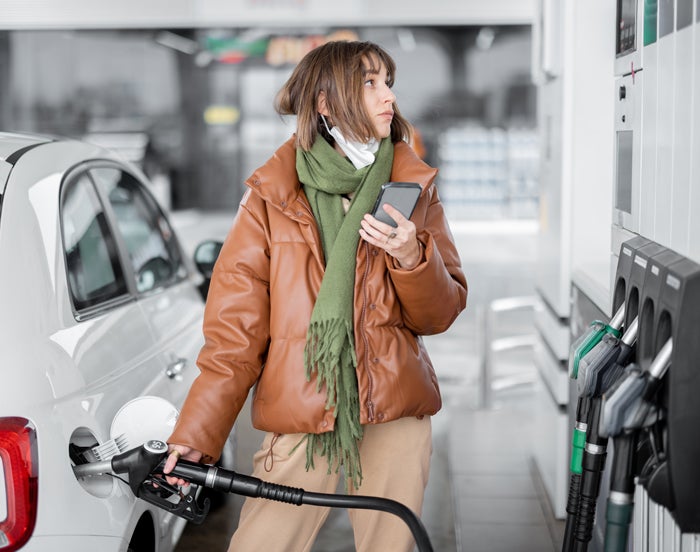
But what about people who are pumping gas into their cars?
GSTV, née Gas Station TV, is one of many digital out-of-home (DOOH) ad platforms trying to win a larger share of spend earmarked for TV. In GSTV’s case, it wants to reach a broad and captive audience – while they’re at the fuel pump.
For DOOH companies, scale is the easy part. The hurdle is getting people to actually watch ads when they’re on the go.
GSTV runs video content with ads across screens in more than 27,000 gas stations around the country, and according to Comscore, has roughly 115 million unique monthly viewers (meaning people using a gas pump playing GSTV ads). But if you’re like me, you’re ignoring the video player above your pump while lamenting high gas prices or figuring out when you’ll make it to your next destination.
Still, GSTV claims it has ways to keep people’s attention while they’re at the gas pump – enough to influence purchase decisions and drive incremental sales, says Eric Z. Sherman, EVP of insights and analytics.

While I have you …
GSTV’s pitch to advertisers is that it reaches an audience more likely to take action than viewers sitting on their couches.
When people are at gas stations, Sherman says, they’re primed to buy something since they’re already out.
People who refill their cars on a given day spend, on average, 3.7 times more in the three hours following a fuel transaction compared to people who didn’t get gas that day, according to a recent GSTV-sponsored study by Affinity Solutions, a data provider with credit card and bank information.
That number is higher for brands that have products people are more likely to grab on the go, like fast-food and consumer-packaged goods, Sherman tells me.

This business model makes sense for these types of products that people might pick up while already out, but not so much for products with a longer purchase consideration period, like automotive or insurance.
(Or at least that’s what I thought the last time I was out getting gas and wondering why the fuel pump was showing me a State Farm ad.)
However, Sherman says auto and insurance brands buy GSTV inventory not because they’re trying to drive an immediate sale, but because they “just want a large audience [that’s] paying attention” – well, hopefully.
Pumping out targeting
But catching people on the go doesn’t guarantee brands will build awareness or sales. They still need some level of targeting.
Like most DOOH companies, GSTV does geotargeting. It also gives advertisers the option to target gas pumps within several miles of a retailer that carries a brand’s products, like Home Depot, Sherman says.
And although GSTV has no way of knowing exactly who is standing in front of a gas pump, it still needs some level of audience targeting, even if it’s broad.
GSTV works with a data partner (which it declined to name) that collects mobile device IDs from phones near its gas station screens. GSTV then matches that data with third-party providers, such as Experian and Acxiom, to create audience segments based on interest or behavior.
For example, the company can use third-party data to determine whether people who live in a particular area are more likely to be interested in, say, gardening. GSTV can’t target a specific person it believes likes gardening, but it can target a particular gas station screen that people who like gardening are more likely to see based on where that gas station is, Sherman says.
Measurement on the go
To figure out if the ads are working, GSTV partners with an array of measurement providers such as MFour, Kochava, Foursquare and Circana to measure lift on brand awareness, app downloads, web traffic and sales.
Last week, GSTV also added Samba TV to its list of measurement partners to help advertisers determine how many unique viewers they’re reaching on GSTV that they were missing elsewhere.
“We rely a lot on third parties [for] measurement and attribution work,” Sherman says, because GSTV doesn’t collect data that allows it to identify a person. “We’re not looking at specific conversion events of individuals.”
But with data for targeting and measurement, gas stations may just become yet another data-driven ad opportunity.
Are you enjoying this newsletter? Let me know what you think. Hit me up at alyssa@adexchanger.com.