
Turning The Comment Section Into A Gold Mine
Publisher comment sections remain an untapped source of intent-based data, according to Kelly Andresen, who recently left USA Today to head up comment monetization platform OpenWeb’s direct sales efforts.

Publisher comment sections remain an untapped source of intent-based data, according to Kelly Andresen, who recently left USA Today to head up comment monetization platform OpenWeb’s direct sales efforts.

Bringing programmatic ads to AI chatbots marks a shift in the business model for AI search, while traditional publishers must find new ways to monetize.

For years, MFA was a mostly web-based problem. Now, generative AI has supercharged the made-for-advertising model, and it’s infecting social media feeds and vertical video platforms.

After a prolonged will-they, won’t-they phase between Paramount Skydance and Warner Bros. Discovery, Netflix swooped in with an $83 billion offer on Friday to acquire the Warner Bros. side of the business.
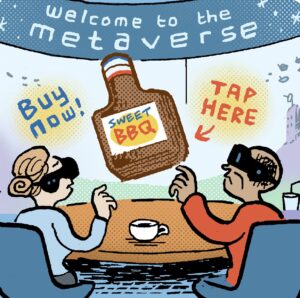
The metaverse hype is over; Apple Maps forays into advertising; and streamers vie for HBO Max and the WBD studio archive.
Spencer has exited The Trade Desk after 12 years, marking another major leadership change amid friction with ad tech trade groups and intensifying competition across the DSP landscape.

Broadsign may actually be building a platform that will make an attractive acquisition target down the road. And one of the major cross-platform Big Tech players feels like the most likely buyer.

CTV spending is flattening, performance is plateauing and buyers are hesitant to push budgets further. The reason is not complicated. When buyers cannot see what they are buying, they cannot commit their spend with conviction.

Enjoy this weekly comic from AdExchanger.com that highlights the digital advertising ecosystem … and happy Thanksgiving!
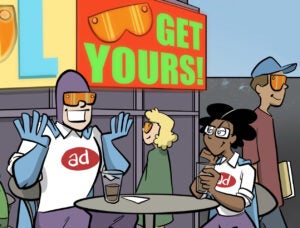
On Tuesday, digital out-of-home (DOOH) ad tech startup Place Exchange was acquired by Broadsign, another out-of-home SSP.

E.l.f. Beauty’s “So Many Dicks” campaign targets corporate leaders via contextual advertising with the goal of increasing diversity in corporate boardrooms.

After pulling back on moderation, Instagram gets flooded with antisemites; BidSwitch builds a programmatic way for AI bots to pay to crawl websites; and nearly half of Gen Z dislikes AI content.

Most of what’s sold as “contextual” today still runs on the same keyword logic we used a decade ago. The industry didn’t reinvent contextual targeting; it simply replaced one keyword with a cluster.
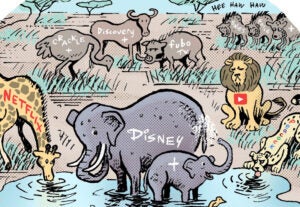
Is it just me, or do third-quarter earnings always seem especially strange?

We break down some of the most interesting financial trends coming out of Q3 earnings reports, and what rises to the level of being worth covering in the first place.

Disney’s Q4 earnings double down on the success of sports streaming content, but the YouTube TV blackout continues.

In July, PubMatic saw a temporary drop in ad spend from a “large” unnamed DSP partner, which contributed to Q3 revenue of $68 million, a 5% YOY decline.

The real challenge is drawing a clear line between the AI-generated content that adds value and the kind that erodes trust and leads to significantly lower ad effectiveness.

Dentsu is for sale; Associated Press is scraping its own archives; and AI is infiltrating newsrooms.

Traffic-starved publishers are hopeful that their long-undervalued audience data will fuel advertising’s automated future – if only they can finally wrest control of the industry narrative away from ad tech middlemen.

New APIs from Roku, Comcast and The Trade Desk are reshaping digital advertising, from self-serve campaign management to cross-platform measurement. But when it comes to identity and targeting, a new study finds that IP address matching is missing the mark.

Social CPMs have risen. The ability to find incremental audiences on social platforms has declined. Add the growing brand-safety concerns, and the equation looks even worse.

Netflix announces a new way to measure viewership; streaming and smart TV companies face data collection investigations; and Polymarket ads incentivized losing bets.

Tuesday marked the launch of Roku’s Ads API, which feeds directly into the company’s self-serve Ads Manager. The new free-to-use toolkit will allow developers to create new integrations between Roku and other kinds of advertising applications.

The Trade Desk is going after Amazon; Facebook creators are going after Meta; and everybody’s going after Warner Bros. Discovery.

WPP aims to turn around faster; YouTube TV tips the carriage deal market; and Roblox takes its time on video ads.

If Roku’s third quarter earnings call could be distilled into a single phrase, it would be “early days.” (With “bullish” as a runner-up, perhaps.)
Comcast has had a pretty rough go of it lately – but there’s still plenty of room for a turnaround.

Tylenol maker Kenvue navigates pushing back against the Trump administration’s claims; viewers of Nobody Wants This are tired of product placement; and US Census data might become less privacy-safe.

Our industry has done a terrible job rewarding publishers for monetization choices that align their supply to quality and outcomes vs. short-term yield bumps. But is it overly optimistic to think The Trade Desk’s recent moves prove that’s changing?

To those who knew him, John “JG” Gentry wasn’t just a CEO. He was a colleague who showed up with genuine care and curiosity.

The group that turned header bidding software into an open standard is bringing the same approach to publisher-side AI agents.

Meta is channeling its booming ad revenue into a $135 billion AI drive to power its “personal superintelligence” future.


Most publishers have no idea that a major part of their video ad delivery will stop working on April 30, shortly after Microsoft shuts down the Xandr DSP.
Ads were going to be a “last resort” for ChatGPT, OpenAI CEO Sam Altman promised two years ago. Now, they’re finally here. Omnicom Digital CEO Jonathan Nelson joins the AdExchanger editorial team to talk through what comes next.

This Wednesday marks the beginning of Hershey’s first major brand marketing campaign since 2018