
Consumers And Brands Crave The Human Touch; Google Gets Sued (Again)
Human-made creative is in again; The Atlantic accuses Google of (another) monopoly; and it turns out brands like to have a say in their sponsorships.

Human-made creative is in again; The Atlantic accuses Google of (another) monopoly; and it turns out brands like to have a say in their sponsorships.

From afar, it looks like Google had a rough year in antitrust court. But zoom in a bit and it becomes clear that the past year went about as well as Google could have hoped for.
The publisher-focused DOJ v. Google ad tech antitrust trial is finished. A judge will now decide the fate of Google’s sell-side ad tech business.

The phrase “caution is key” has become a totem of the new age in US antitrust regulation. It was cited this week by both the DOJ and Google in support of opposing views on a possible divestiture of Google’s sell-side ad exchange.

The fate of the open web will be decided on who controls the data that drives monetization and the AI that determines distribution. Google controls both, and proposed remedies to its ad tech monopoly do not address this imbalance.
American publishers are hamstrung by antitrust law; should marketers lean into ragebait?; and Pexplexity is hitting pause on its ads business.

Publishers must coalesce to gain a credible bargaining position and stop the bleeding caused by AI search. From there, we must put the processes in place to actually operate a licensing mechanism.

Law firms are targeting marketers for class action suits; Discord is trying to go mainstream; and ICE’s media presence is getting unavoidable.
Where the DOJ v. Google ad tech antitrust trial stands after one week’s worth of remedies arguments.

Court is back in session. And the fate of the open internet is in the balance.
The Google trial remedy phase is about to begin; not all of YouTube’s AI plans are hitting; and The Trade Desk’s Kokai pitch decks leave something to be desired.

Judge Mehta defends his light touch in addressing Google’s search monopoly; the de minimis exemption for imports is over, and it could ding Q4 ad spend; and a whistleblower says Meta ignored WhatsApp’s privacy lapses.
Late Friday evening, Google filed its proposed remedies to its ad tech monopoly to District Court Judge Leonie Brinkema, and unsurprisingly, they’re rather mild – and very different from what the Department of Justice is looking for.
Remedies in the federal search antitrust case against Google landed with a thud earlier this week. Most publishers and ad industry pundits were sorely disappointed.

We’ve got the witness list for the remedy phase of the Google antitrust trial, which starts in September. How might Google be forced to change its ad server and exchange to make this corner of the ad tech market competitive again?
The DOJ is proposing that Google should give rival ad exchanges and ad servers real-time access to bidding data from AdX – and Google agrees.

If the court ultimately orders Google to spin off AdX or DFP, the result would be a fundamental rebalancing of power across the digital advertising supply chain. For marketers, the implications are just as significant.
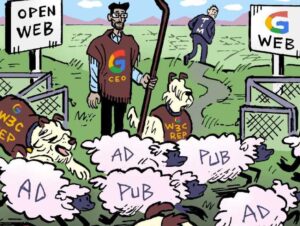
Rival browsers raise an objection to Google being forced to sell Chrome; ad agencies pivot to software and services; and people are turning to chatbots instead of search, with error-filled results.

Black Friday ecommerce continues to surge, mainly on mobile; social platforms pull optimization features for health and beauty brands; and Google’s antitrust lawyers subpoena info about rival AI search startups.
Meta’s privacy policies are uniquely impenetrable. Plus, Google once thought Apple would likely expand its ad business to third-party apps.
The Justice Department will ask Judge Amit Mehta, who ruled in August that Google operates a search monopoly, to require Google to sell Chrome. Plus, the ad tech wants the IAB Tech Lab to roll out curation standards.

Why the agency pivot to alternative payment models is good for M&A; Zeta Global responds to a short-seller’s explosive claims; and X sees a mass exodus after the election.

The catalyst for Google’s future success – regardless of any legal ruling – is its YouTube strategy. Opening YouTube’s ad inventory to outside demand will increase its value.
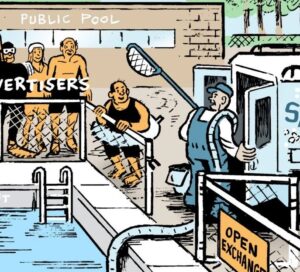
NCIS: Ad Tech takes off as Washington zeroes in on Adalytics reports; Kroger says attention has yet to prove correlation to performance; and inside California’s backroom deal with Google to fund journalism and AI.

In-game ad platform Frameplay joins with competitors to chase scale; top-level domains become a top-level concern; and could Google be forced to open its data warehouse?

Google isn’t perfect. But it offers convenient, cost-effective advertising tools that millions of small businesses use to find customers, grow and succeed. If the DOJ breaks up the company, it will also break those tools.
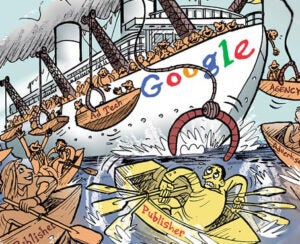
Publishers were encouraged to see the DOJ highlight Google’s stranglehold on the ad server market and its attempts to weaken header bidding.

Two of the EU’s biggest Big Tech antagonists are set to resign; a GAM breakup could usher in post-ad-server programmatic; and how Google kept Prebid separate from the IAB Tech Lab.

Someone will eventually need to make a Netflix-style documentary about the Google ad tech antitrust trial happening in Virginia. (And can we call it “You’ve Been Ad Served?”)
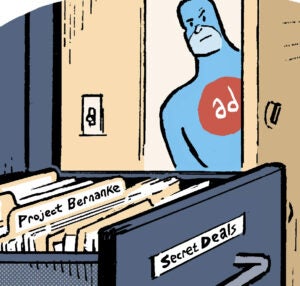
In today’s newsletter: Google paid $445 million in rebates in 2018; publishers across the ideological spectrum blame brand safety for hurting the media biz; and Mark Zuckerberg apologizes to Congressional Republicans for Meta’s content moderation.