
PODCAST: The Big Story
The Trade Desk’s Sell-Side Settlement
With its PubDesk wrapper, The Trade Desk is putting roots into ad tech’s sell side. But publishers are wary.

With its PubDesk wrapper, The Trade Desk is putting roots into ad tech’s sell side. But publishers are wary.
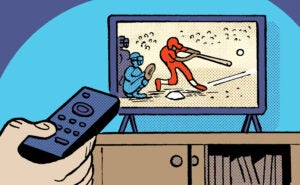
TiVo has officially halted the sale and manufacture of its once-revolutionary DVR products. Which raises the question: What does TiVo even do anymore, anyway?
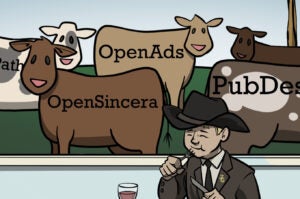
Enjoy this weekly comic from AdExchanger.com that highlights the digital advertising ecosystem …
The Viant-Tubi integration offers new data insights; advertisers can buy sponsored product ads on Gopuff, thanks to TTD; and publishers continue to face traffic woes.

The layoffs reflect a strategic decision on People Inc.’s part to free up money to invest in growth areas, according to CEO Neil Vogel’s memo to employees.

You just launched a new campaign across multiple channels, from search to social. Perhaps you’ve gone out on a limb – maybe even against the recommendation of your CEO or board – and included streaming TV in the mix.
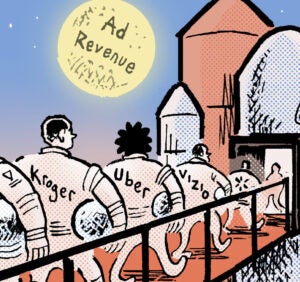
Retail media has broken through some critical threshold, and is no longer the straightforward digitalization of shopper marketing budgets.
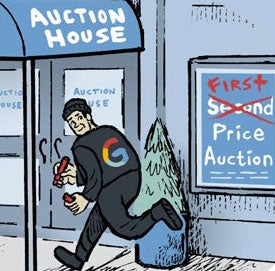
Ask advertisers, not Meta, how best to use Meta’s ad platform; holdcos and big brands are pressuring Big Tech to self-regulate; and how data-driven animal husbandry is impacting marketing.

Publishers must coalesce to gain a credible bargaining position and stop the bleeding caused by AI search. From there, we must put the processes in place to actually operate a licensing mechanism.

CleanTap claims that 100% of the invalid traffic it spoofed was accepted into live auctions run by programmatic platforms and was successfully bid on by advertisers.

Optable introduced AI agents this week, allowing clients to improve their workflows with the help of AI and integrate with multiple tech platforms.

Online advertising’s privacy problem isn’t just about bad actors; it’s about bad metrics, says Marc Guldimann, CEO and founder of attention startup Adelaide. “I think a lot of the invasive behaviors in the ad tech space can be traced back to a lack of a shared understanding of quality,” he says.

ChatGPT and others continued the fragmentation of the search journey, which today hops between platforms and intents. The funnel no longer exists. Here’s how to pivot your brand’s SEO/GEO strategy.
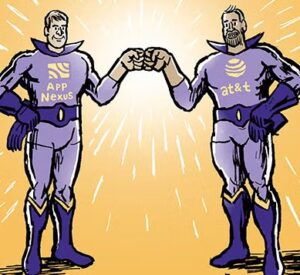
Judge Leonie Brinkema is ready to be done with the DOJ v. Google saga; Amazon DSP comes out on top; and Mozilla brings programmatic ads to to the Firefox browser.

HUMAN has recently started complementing its bid request analysis by analyzing the time between when a bot clicks an ad and when the landing page loads. Now it’s offering the solution to individual advertisers.
Through Index Exchange’s data vendor marketplace, curators gain access to third-party data sets without needing their own integrations.

Retail media networks (RMNs) burst onto the scene as a transformative solution for lower-funnel, point-of-purchase conversions. It’s no wonder the category is surging: eMarketer projects retail media spending will top $60 billion in the US alone this year (up 20% from 2024) and reach $100 billion in the US by 2028.

Duolingo now speaks the language of ad sales; marketers worry about writing like bots; and Microsoft is getting in on ad-supported platforms, too. Duolingo now speaks the language of ad sales; marketers worry about writing like bots; and Microsoft is getting in on ad-supported platforms, too.

Healthcare and life sciences have long lagged in digital advertising, still focused on mass-audience approaches. But as the blockbuster drug era fades and precision medicine rises, broad strategies often fail to make precision therapies commercially viable – leaving life-changing treatments underutilized.

TTD says OpenAds is not just a reaction to Prebid’s TID change, but a new model for fairer, more transparent ad auctions. So what does the DSP need to do to get publishers to adopt its new auction wrapper?

Yieldmo’s Mike Yavonditte joins Inside the Stack podcast to unpack the misalignments between DSPs, agencies, and buyers.

People don’t really gather around water coolers anymore. But that doesn’t mean streaming and live events can’t still create water cooler moments like there once were for broadcast audiences watching appointment TV.

The Trade Desk is facing class-action lawsuits claiming its “privacy-safe” Unified ID 2.0 is really just repackaged cookie tracking.

Law firms are targeting marketers for class action suits; Discord is trying to go mainstream; and ICE’s media presence is getting unavoidable.
What happens when an ad tech developer partners with a cybersecurity expert to start a new company? You end up with a consumer product that is both a privacy software service and a programmatic advertising ID.
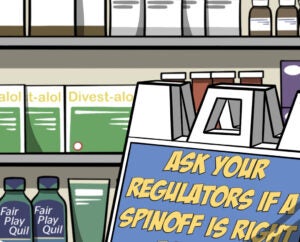
Enjoy this weekly comic from AdExchanger.com that highlights the digital advertising ecosystem …

If you didn’t happen to watch the main stage of AdExchanger’s Programmatic IO New York this week, then you missed a great (albeit way too brief) conversation about CTV’s programmatic progress.

The Trade Desk insists its OS is still coming; TikTok Shop is becoming a grocery store; and for AI studios, bad press is still press.
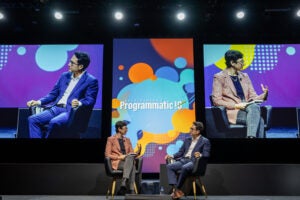
Alvaro Bedoya shared his qualms with digital advertising’s more controversial targeting tactics and how kids use gen AI and social media.

The number and scope of U.S. laws that require advertisers to disclose the use of AI are limited. But there are some restrictions and guidelines that advertisers must follow to ensure their compliance.