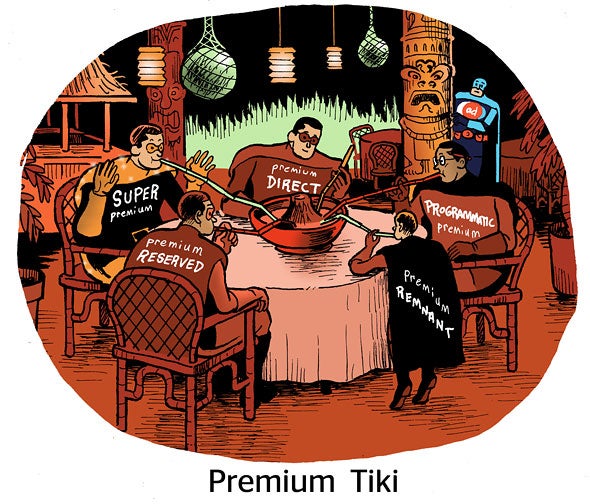
While agencies push for more programmatic buying options, publishers want to maintain control in TV ad buying negotiations – and particularly over their “premium” content.
This standoff was a topic of conversation at AdExchanger’s Programmatic I/O conference last week during my panel of agency executives discussing the programmatic tensions between buyers and sellers.
Programmers are trying to “slow down the pace of adoption” for auction-based bidding, said Manny Hernandez, SVP of activation at Dentsu-owned Carat. One way they’re doing so is by limiting the supply they make biddable. Instead, publishers prefer to gatekeep their prized inventory with a high price tag attached to the “premium” label.
Programmers can also maintain this level of control and pricing with programmatic guaranteed deals, which are essentially automated insertion orders sent through programmatic pipes.

But because CTV publishers are slower to make their inventory available in open auctions, agencies still consider programmatic as a nice-to-have – and not a requirement – for CTV campaigns, Hernandez said. The majority of CTV ad buys are still happening via insertion orders or programmatic guaranteed deals.
Agencies want to be able to bid on more CTV inventory for better scale, targeting and cost effectiveness. But for that to happen, buyers must make their sell-side counterparts reconsider the meaning of “premium.”
What the heck is premium content, anyway?
The challenge is that publishers have good reasons for preferring direct spend commitments.
Perhaps most importantly, publishers can justify charging higher prices by guaranteeing advertisers placements within what they call “premium” inventory.
TV publishers historically tout their own content – professionally produced long-form video distributed on TV – as “premium.” They lean on the same assertion to argue their dominance over digital-native rivals like YouTube.
YouTube, which has a reputation as a hub of user-generated content, is actively trying to change that perception as it quests to become a formidable CTV competitor.

But buyers say this way of thinking is outdated.
Premium content isn’t about the production quality of content or whether it airs on linear TV. It’s about whether that content has the ability to reach an advertiser’s intended audience and have an impact, said Rachel Eckerling, SVP of Publicis-owned Precision US, during the panel discussion.
Premium should also refer to a viewer’s intentionality in seeking out a piece of content, added Oscar Rondon, SVP of US products and partnerships at media buying agency MiQ, also on stage.
If someone’s frantic Google search for instructions on how to unclog a toilet brings them to a random how-to YouTube video, then that video becomes premium content to that user. (Although, arguably, one likely doesn’t want to sit through pre-roll ads if their toilet is about to overflow.)
The programmatic promise
Still, literally anything can be premium.
And for buyers, that argument also serves as an argument to publishers about the importance of making their supply biddable. Although agencies prioritize guaranteed ad placements that meet a client’s campaign requirements, they also want biddable auctions to help them fill in any gaps.
If agencies aren’t getting enough of what they’re looking for through direct or programmatic guaranteed deals, Hernandez said, they need to move to private marketplaces to quickly find more inventory that can reach an advertiser’s desired audience for a fair price. And beyond PMPs, some buyers use the open exchange for the “long tail” of CTV inventory that can help fulfill a client’s audience and budget requirements, Rondon said.
What buyers want, he said, is as many options as possible to reach an intended audience that will take action, and to do it at a competitive price.
Sounds pretty reasonable.
Are you enjoying this newsletter? Let me know what you think. Hit me up at alyssa@adexchanger.com.