
Cadent Gets Direct; Curating YouTube, Netflix-Style
All of Cadent’s SSP’s CTV supply paths are now direct; Netflix is thriving on repurposed YouTube content; and the Washington Post continues to struggle.

All of Cadent’s SSP’s CTV supply paths are now direct; Netflix is thriving on repurposed YouTube content; and the Washington Post continues to struggle.

Our industry has done a terrible job rewarding publishers for monetization choices that align their supply to quality and outcomes vs. short-term yield bumps. But is it overly optimistic to think The Trade Desk’s recent moves prove that’s changing?
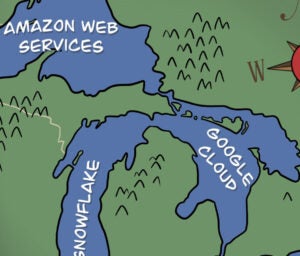
AWS RTB Fabric offers ad tech platforms more streamlined integrations with ecosystem and infrastructure partners, allegedly lower latency compared to the public internet and discounts on data transfers.

Equativ is now blocking made-for-advertising content from all exchange activity, marking a larger trend of pushing to eliminate MFA sites.
Most sell-side curation deals appear in line with typical SSP take rates, according to Jounce Media. In fact, some of these fee structures resemble how publishers have long done business with supply-side partners.

The Brand Safety Institute is expanding its publisher transparency initiative to include new media quality assessments, including data compliance.

Why is programmatic media buying so dang complicated? That question was an ever-present topic at the 2025 ANA Media Conference in Orlando, Florida this week.

The Brand Safety Institute released a new tool that lets publishers check whether their site domains have been flagged as MFA by third-party verification vendors.

AdExchanger reached out to a number of major DSPs to gauge the current state of adoption of the IAB Tech Lab’s new video ad standard.

CTV transparency remains a flashpoint between advertisers who want it and broadcasters who won’t provide it. Our special guest, Jounce Media’s Chris Kane, weighs in. Plus, we examine a persistent issue in ad tech: the chronic mislabeling of instream video.

DSPs have been slow to adopt the Tech Lab’s new signal for classifying online video, causing confusion about which placement signal should be prioritized.
In response to shifting ad industry trends, A360 Media abandoned its made-for-advertising model four years ago and streamlined its site design to court programmatic demand.
Freestar adopted a new approach to curation developed by Audigent that gives buyers a priority lane to publisher inventory with higher viewability and attention scores than most open-auction inventory.
By implementing the anti-MFA playbook detailed in the ANA’s November report, brands were able to reduce the portion of their programmatic budgets going to made-for-advertising sites to about 1%.
The partnership makes MFA-blocking tools more accessible to mid-size buyers. Plus, AdLib can block MFA regardless of whether a DSP is willing to proactively filter it.

Setting price floors can unlock additional revenue. But only by setting the “right” floor for any given impression can you increase and not harm yield.

The average CTV platform now authorizes 30 SSPs to sell its inventory. And one of the most noticeable effects of increased SSP saturation in CTV has been higher costs due to SSP reselling.

Since launch, 82% of advertisers that buy inventory through the Yahoo DSP have tried Backstage at least once. And buyers are seeing lower CPMs from cutting out SSPs.

Pivoting to a “premium internet” is like avoiding the parts of town that have been blighted by illicit activity. The only real solution to MFA is for the dollars to dry up.

Buyers could solve many of the issues they have with the open web by focusing less on viewability and clicks and more on driving performance outcomes, says Goodway Group director of strategic partnerships Andrea Kwiatek.

Why does MFA continue to thrive? MFA monetization benefits everyone in the ad tech ecosystem that collects a revenue share. That includes both SSPs and DSPs.

Why the 4A’s is hosting secret meetings to redefine MFA from “made for advertising” to “made for arbitrage.” Plus, a new report from Adalytics reveals that MFA-blocking solutions aren’t as effective as tech vendors claim.

Despite the backlash against MFA websites, there is still no industry standard to define MFA. So the 4A’s is hosting monthly meetings between buyers and sellers to nail down more explicit criteria for what constitutes MFA.

IAS is expanding its anti-MFA solution to identify what it calls “Ad Clutter” sites, which mimic MFA ad loads but don’t operate with an ad arbitrage model.

DoubleVerify added a feature to its platform on Tuesday that classifies MFA sites based on a tiered system.

Here’s today’s AdExchanger.com news round-up… Want it by email? Sign up here. OurTube Neal Mohan published his annual letter this week – although, this time he’s chief of YouTube, following Susan Wojcicki’s exit last year. Mohan shares an interesting peek at YouTube’s long-term priorities. For example, although he talks about YouTube Shorts, the format isn’t as […]

2023 saw SPO become further cemented in the strategies of DSPs and SSPs for capturing market share. But the long-term trend might see SPO become the default for programmatic advertisers.

Publishers’ deals with Taboola and Outbrain might be helping divert more revenue to shady MFA sites than they generate for legit publishers.

On Thursday, OpenX announced a twofold initiative called TV+, which reserves the CTV label for what the company deems premium inventory while booting resellers from the supply pool.

Here’s today’s AdExchanger.com news round-up… Want it by email? Sign up here. Is Free Social A ZIRP? Social media is free. Well, it’s supposed to be, anyway. That’s the point. All your friends join, it’s free fun, and rather than paying money you get served with ads. But that could change. On Monday, Android Authority […]