
Readers Are Flocking To Political News, Says WaPo – And Advertisers Are Missing Out
During certain periods this year, advertisers blocked more than 40% of The Washington Post’s inventory over brand safety concerns.

During certain periods this year, advertisers blocked more than 40% of The Washington Post’s inventory over brand safety concerns.
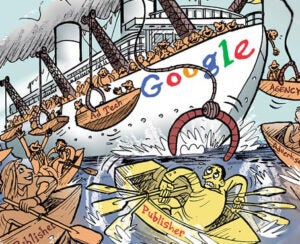
Publishers were encouraged to see the DOJ highlight Google’s stranglehold on the ad server market and its attempts to weaken header bidding.

OpenX would like people to stop thinking about supply-side platforms as “dumb pipes,” thank you very much.

The publication still makes most of its on-site digital revenue from programmatic. But it’s doubling down on direct-sold custom content, especially when it comes to video and social media.

Mirriad is heading the Diverse Media Alliance to help create more ad opportunities and incremental revenue for diverse publishers. The initiative currently includes Canela Media, LatiNation, BOMESI, NTERTAIN’s NEON16 and The Shade Room as launch partners.

Ad revenue was helped along by 9% growth in unique visitors to the top sites in DDM’s portfolio. Programmatic ad rates were up roughly 36% in Q2, spurred by adoption of DDM’s D/Chipher contextual targeting solution.

With an approved list of sites and contextually segmented content, publishers don’t risk getting caught up in automated keyword blocklists, which consistently demonetize the news.

Ranker saw a 5% increase in demand from a new fully automated Prebid wrapper optimization feature in Magnite’s Demand Manager.

Publishers and SSPs aren’t incentivized to accurately label their video inventory. But increased pressure from the buy side could correct the skewed pricing dynamics that result from outstream being sold as instream.

AdExchanger caught up with Joy Robins, NYT’s global chief advertising officer, in Cannes for real talk on the top issues facing publishers, from overzealous keyword blocking to balancing subscriptions with ad monetization.

Future believes its new monetization offering can succeed where other publishers have struggled with selling ad tech and consulting to third-parties.

Laptop fans can rest a little easier. A network of well-known MFA sites operated by Perion-owned Content IQ have been taken offline.

Late last year, Morning Brew hired Sara Badler, a longtime programmatic advertising executive, as CCO. But the publisher, which built its business on direct, isn’t planning to change its approach to monetization.

SSP, meet PET. TrustX has been spun out of Digital Content Next and is now housed within a newly formed company called Symitri, which is developing privacy-enhancing technologies for programmatic advertising.

The practice involves monetizing resold subdomains jammed with recycled MFA articles produced by notorious content farms.

BuzzFeed took another lap around its AI-related talking points as its advertising business took another lap around the drain.

The company’s total revenue was down 1% YOY due to a decline in ad revenue across its News Media and Dow Jones publishing groups.

Dotdash Meredith previewed plans for how its OpenAI partnership could provide incremental traffic and scale its contextual targeting capabilities across a wider network of sites and media types.

Advertising accounted for $222.7 million, up 39% YOY. CEO Steve Huffman attributed this growth to a boost in search traffic from Google.

Business Insider released a new targeting tool called SAGA reACT that analyzes the emotional reactions its content produces to create actionable, emotion-driven audience segments.

Gannett experienced its fourth consecutive quarter of growth in Q1 2024. It pointed to recent partnerships with non-news publishers as instrumental to growing its audience and ad revenue.

Appealing to advertisers’ better angels is never going to bring ads back to the news. But appealing to their bottom lines might.
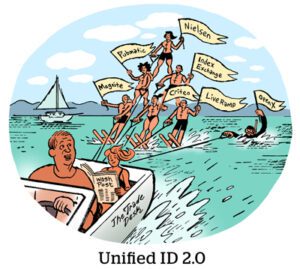
Bonbon gives users rewards – such as discounts or chances to win merchandise – for setting up email registrations with publishers. Now The Trade Desk’s OpenPass will include that same rewards functionality.

To build a first-party data strategy, the NY Post contracted Permutive and Prohaska Consulting for advice on monetizing its audience data and growing its addressable audience. The collaboration prompted Permutive and Prohaska to expand their combined services to all publishers.

Industry experts weigh in on Forbes’s MFA subdomain and why ad verification tools still regularly fail to flag some instances of alleged SIVT.

The past decade has been tumultuous for supply-side platforms. But SSPs will be fine, according to SSPs. They’re simply evolving.

Nubai claims that if buyers don’t shell out for premium placements like on CNN and Fox News, Outbrain instead places their links on less-reputable sites that have been found to attract a high degree of sophisticated invalid traffic – aka bots.

Despite the backlash against MFA websites, there is still no industry standard to define MFA. So the 4A’s is hosting monthly meetings between buyers and sellers to nail down more explicit criteria for what constitutes MFA.

G/O Media introduced a new contextual targeting solution that combines first-party contextual signals and data on audience browsing behavior to create cross-site contextual segments that can be activated programmatically.

In addition to establishing another pipe for programmatic demand, Colossus SSP will add SHE Media’s network of minority- and woman-owned publishing brands to its own minority-focused PMPs.